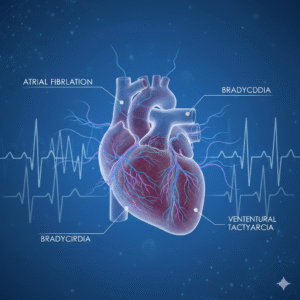
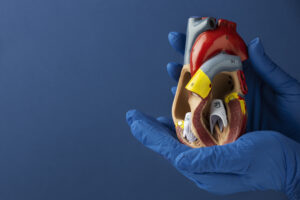
Structural heart disease interventions refer to a suite of advanced, minimally invasive procedures designed to treat abnormalities of the heart’s valves, walls, and chambers. These conditions, which can be congenital (present from birth) or acquired (developing later in life, often due to aging or disease), were traditionally managed exclusively through major open-heart surgery.
The hallmark of structural interventions is the use of catheter-based techniques. Instead of large chest incisions, a thin, flexible tube (catheter) is inserted, typically through a blood vessel in the groin, and guided to the heart under real-time imaging.
Major procedures include:
- Transcatheter Aortic Valve Replacement TAVR: Used to replace a severely narrowed aortic valve (aortic stenosis) with a new valve without removing the old one. This has revolutionized treatment for high-risk surgical patients.
- MitraClip and Transcatheter Mitral Valve Repair TMVR Used to treat a leaky mitral valve (mitral regurgitation) by clipping the valve leaflets together or replacing the valve, reducing blood backflow.
Treating Structural Deformities
Beyond valve disease, these interventions are vital for closing structural deformities:
- Septal Defect Closures: Devices are implanted via catheter to close holes in the heart walls, such as a Patent Foramen Ovale PFO or Atrial Septal Defect ASD, which can prevent stroke and normalize blood flow.
The key benefits of these minimally invasive approaches include significantly shorter hospital stays, less pain, faster recovery times, and reduced risk of complications compared to traditional open surgery, offering new hope to elderly and high-risk patients.